
You have to read this. Nanotechnology from 1,600 years ago. The description of pregnancy test kits helps readers understand the potential.
You have to read this. Nanotechnology from 1,600 years ago. The description of pregnancy test kits helps readers understand the potential.
Some of my favorite things, all in one: science journalism, maps based on data, a courageous practitioner, alleviation of human suffering, and a correction to previously published material. After more than 150 years, Dr. John Snow is properly acknowledged in a leading journal.
Duh, so that’s why I like Richard Powers’ books so much. The simple term is “Lab Lit.” It means works of fiction that get the science right *and* the story. I teach students that effective science writing often involves a main character. In journalism, that character is a real person. In Lab Lit, the authors get to make up the people.
In Lab Lit, Fiction Meets Science of the Real World – NYTimes.com.

Creative Commons http://www.flickr.com/photos/91499534@N00/4258434540/sizes/m/in/photostream/
I saw my first dark-eyed junco of the season in my yard today, perched in my bare lilac bush. That means he’s here for the winter, from someplace cold enough to make Central Illinois feel like a haven. Then I noticed not one, but many, robins flying about. Right now, six are gathered in my yard. If this is a track meet, the lone junco is here to hand the baton of winter to the relay flock of robins. They’ll carry it somewhere south. The lovely junco reminds me that winter is a matter of perspective.
Endeavour and the Hollywood sign: How we got the photo – latimes.com.
A powerful lens from a long distance allows a shot that the naked eye might not see. We allow magnification to show microscopic life without calling it distortion. But when we use magnification in contexts we usually can see, it can really confuse us.
When It Comes To Buying Organic, Science And Beliefs Don’t Always Mesh : The Salt : NPR.
This National Public Radio story (7 min 47 sec) works on many levels.
— It explains that scientific studies have limits. They can only report on what was found, not on what was not or on the ramifications of the findings. They report only the findings.
— It uses a discussion format, rather than a narrative, to explain terms and concepts.
— It includes comments and questions from listeners.
— It helps define the terms. “Organic” has a regulated definition.
This CBS story gives the “Wheat Belly” doctor full control of the story. How legitimate are his claims about the ill effects of eating wheat? What would wheat growers or crop scientists say? What exactly is the history of the protein called gliadin? Is it new like the doctor says? These are the kinds of questions we need answered by journalists.
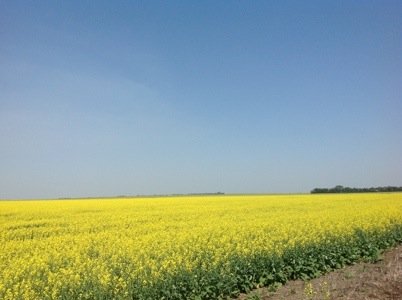
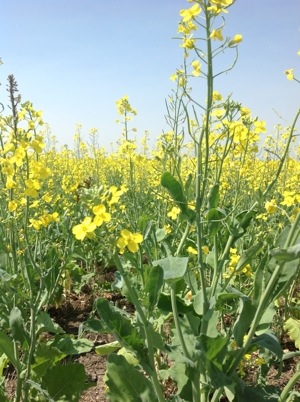
Fields of yellow as far as you can see.
We passed many Glaciers between Lake Louise and Jasper, driving the Icefields Parkway. The glaciers are on the move, too, as the sign at Athabasca Glacier notes. Bighorn sheep climbed the cliff along the highway.


One day in Glacier National Park, we hiked through giant cedar, hemlock and black cottonwood trees to Avalanche Lake. The cedars were so large, it would take three people holding hands to encircle one. The next day, we hiked the Apgar Lookout trail, through the forest that burned in 2003. (That fire caused us to cancel our trip planned then and we are now getting here 9 years later.) Pines have grown back on Apgar trail to just the right size for a Christmas tree in a small apartment — 5 feet tall and skinny. I could encircle the trunk with my thumb and forefinger. Small but growing, burned but not obliterated.
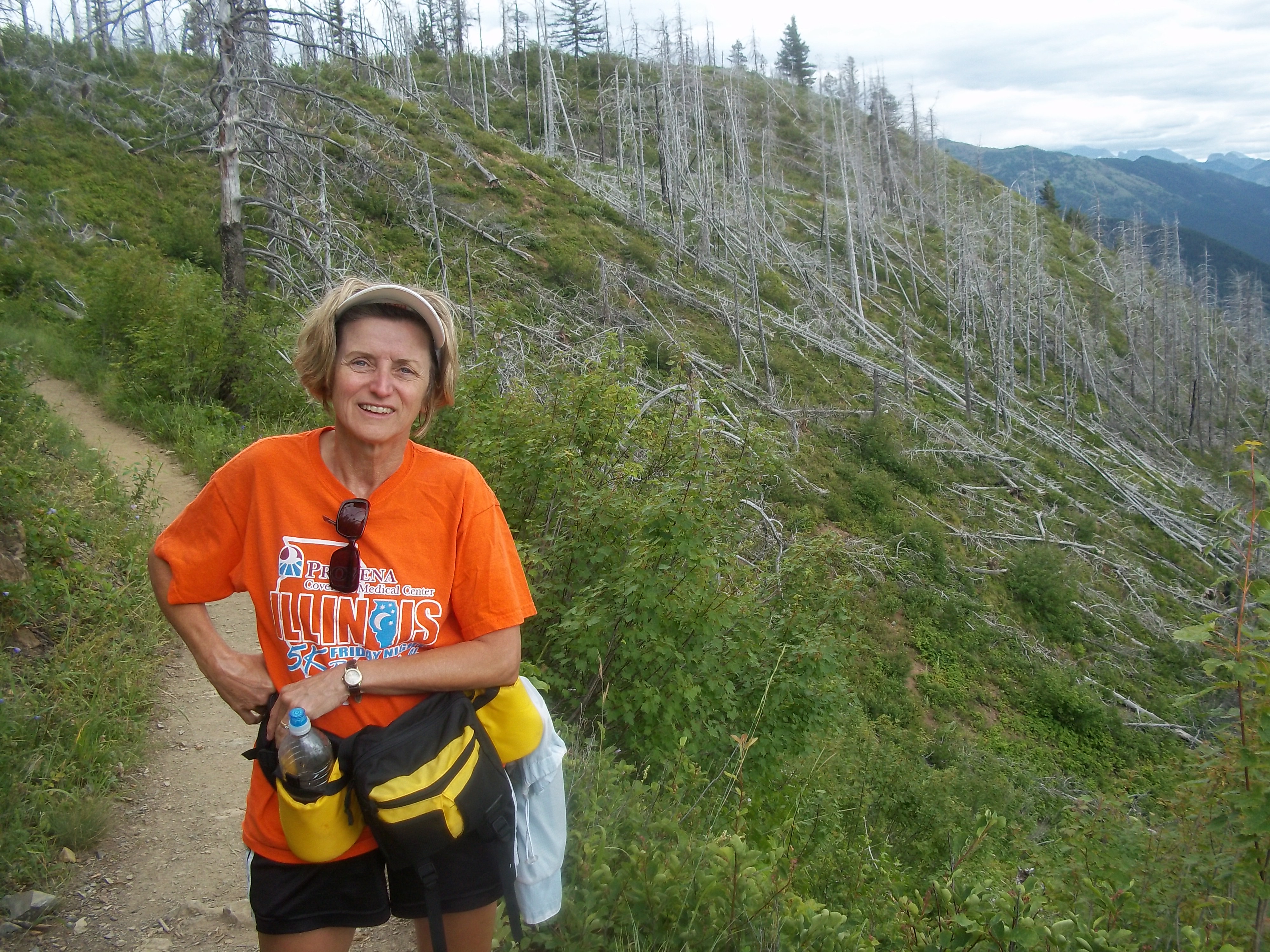
Apgar Lookout Trail, Glacier National Park
 jennifer follis